Reformed Baptist Beliefs
The Apostolic Gifts Ceased, Not the Spirit
The Gifts Ceased, Not the Spirit
This is a very short, not exhaustive article, so that friends who have enquired from me and our church doctrinal view on the Apostolic Gifts of the Holy Spirit to have the bare outline of the scriptural reasonings.
Cessationism is often caricatured as the belief that the Holy Spirit no longer works, heals, guides, or acts supernaturally. That is not biblical cessationism.
Cessationism teaches something much narrower: the extraordinary revelatory and sign gifts connected with the apostles and the foundation of the New Testament church have fulfilled their purpose and ceased. The Spirit has not ceased. The apostolic gifts have.
So the question is not, Can God heal today? Of course He can. The question is, Does Christ still give men the apostolic gifts of prophecy, tongues, miraculous healing, and signs as continuing credentials in His church?
We need not rest the case on the disputed interpretation of 1 Corinthians 13:8-10. There is a stronger cumulative case.
1. Apostles and prophets belonged to the foundation
Paul says that the church is “built upon the foundation of the apostles and prophets, Jesus Christ himself being the chief corner stone” (Ephesians 2:20). Ephesians 3:5 shows that these are the New Testament apostles and prophets through whom divine revelation was being given.
A foundation is laid once. You do not keep laying new foundations as each generation of the building rises.
This is why the New Jerusalem is pictured as having “twelve foundations, and in them the names of the twelve apostles of the Lamb” (Revelation 21:14). The apostles were not an endlessly recurring office. They belonged to the unique, foundation-laying age of the church.
Once the foundation is complete, the church builds upon it. It does not keep adding to it.
2. Miraculous signs authenticated that foundation
Why were extraordinary signs given so abundantly in the apostolic age? Scripture repeatedly connects them with the authentication of God’s messengers and message.
Paul writes, “Truly the signs of an apostle were wrought among you... in signs, and wonders, and mighty deeds” (2 Corinthians 12:12).
Hebrews describes the gospel as first spoken by Christ and then “confirmed unto us by them that heard him; God also bearing them witness, both with signs and wonders” (Hebrews 2:3-4). Acts likewise says that the Lord “gave testimony unto the word of his grace, and granted signs and wonders to be done” (Acts 14:3).
This does not mean that only apostles ever performed miracles. Stephen and Philip plainly did (Acts 6:8; 8:6-7). But those miracles belonged to the apostolic mission and authenticated the new revelation being delivered through that foundational generation.
The signs were God’s seal upon His messengers. Once the message had been delivered and the foundation laid, the seal had fulfilled its purpose.
3. Revelation was delivered once for all
Jesus promised the apostles that the Holy Ghost would “teach you all things” and “bring all things to your remembrance” (John 14:26), and would “guide you into all truth” (John 16:13). These promises were first given to the men appointed to bear authoritative witness to Christ and give the New Testament revelation.
Jude could therefore speak of “the faith which was once delivered unto the saints” (Jude 3). The word means once for all. Christianity is not waiting for fresh doctrines, new prophetic revelations, or additional words from God.
This creates a serious problem for modern prophecy. If someone truly speaks a word from God, that word carries God’s authority. Biblical prophecy is not partly inspired, approximately true, or mixed with error. If it may be wrong, it is not the same gift found in Scripture.
Based on these Biblical foundations, the 1689 Baptist Confession says that the former ways of God’s revealing His will are “now ceased”, and that nothing is to be added to Scripture “by new revelation of the Spirit”.[1]
4. Biblical tongues were miraculous signs
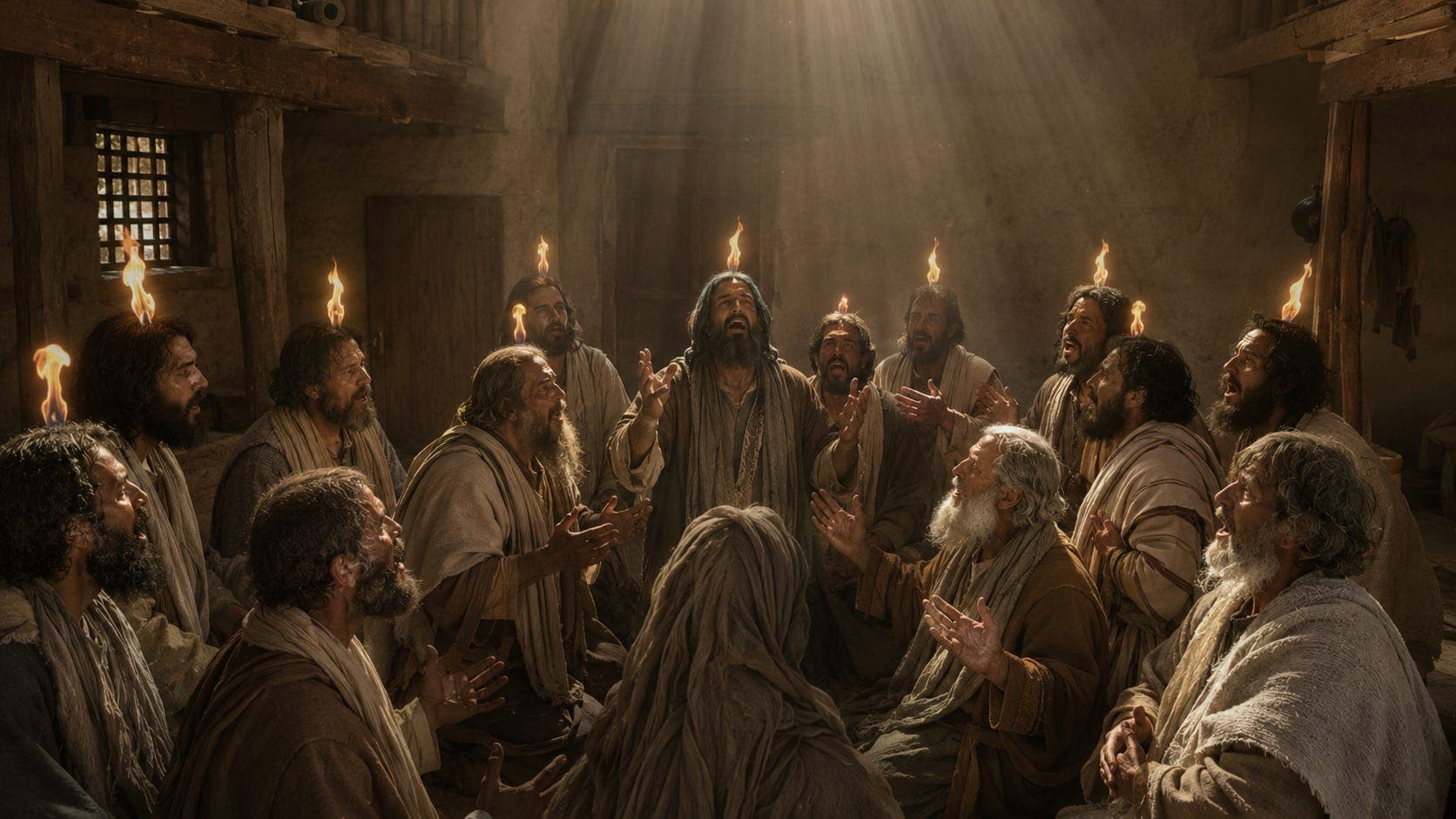
At Pentecost, tongues were recognisable languages: “every man heard them speak in his own language” (Acts 2:6). Men miraculously spoke languages they had never learned.
Paul also explains their sign-purpose. Quoting Isaiah 28, he says, “Wherefore tongues are for a sign, not to them that believe, but to them that believe not” (1 Corinthians 14:21-22). They marked a great turning point as the gospel went to the nations and also carried a warning to unbelieving Israel.
Even in Corinth, tongues were never an invitation to uncontrolled religious noise. They required interpretation, strict order, and no more than two or three speakers (1 Corinthians 14:27-28, 33, 40).
Whatever someone calls an experience today, using the word tongues does not prove that it is the biblical gift.
5. History confirms that the apostolic gifts were not permanent
Cessationism is not a modern theory invented by Christians embarrassed by the supernatural.
In the late fourth century, John Chrysostom preached on 1 Corinthians 12 and said the passage was difficult because of the gifts’ “cessation”, referring to things which “then used to occur but now no longer take place”.[2] He even described the ancient gift of tongues in terms of people speaking languages such as Persian, Roman and Indian.
During the Reformation, Calvin wrote that the gift of healing was “temporary”, while immediately adding that the Lord still heals His people when He sees fit.[3]
Church history certainly contains reports of remarkable providences and healings. A cessationist need not deny them all. But that is very different from saying that apostles, prophets, tongues-speakers, and gifted healers continued as ordinary offices or recognised miracle-workers in the churches.
The Holy Spirit still works powerfully
Here we must be equally clear. Cessationism is not spiritual naturalism.
The Holy Spirit still regenerates sinners (John 3:5-8), indwells every believer (Romans 8:9), sanctifies us (Galatians 5:16-25), helps us in prayer (Romans 8:26), gives assurance (Romans 8:16), illumines God’s Word, equips believers for service, and empowers gospel preaching, and many other graces.
And God still heals.
James does not tell the sick to find a gifted healer. He tells them to call for the elders and pray, and says, “the prayer of faith shall save the sick, and the Lord shall raise him up” (James 5:14-15). Even during the apostolic age, Paul left Trophimus sick at Miletum (2 Timothy 4:20), advised Timothy to use a remedy for his frequent illnesses (1 Timothy 5:23), and said of Epaphroditus, “God had mercy on him” when he recovered (Philippians 2:27).
We should therefore pray boldly for healing while submitting to God’s sovereign will. He may heal through medicine, ordinary providence, or an extraordinary act of His power. What has ceased is not God’s power to heal , but the apostolic gift of healing bestowed upon particular people as a sign.
Nor does cessationism deny providential guidance. The Spirit may bring Scripture forcefully to the conscience, burden us to pray for someone, give unusual wisdom, open or close providential doors, or preserve His people from danger. But we must not turn such providences into fresh revelation or give them the authority of, “God told me.”
That is the heart of biblical cessationism.
The foundation has been laid. The apostolic revelation is complete. The signs have fulfilled their purpose. Yet the Holy Spirit is no less present, sovereign, powerful, or active in Christ’s church today.
Cessationism does not put God in a box. It simply refuses to call something an apostolic gift when God’s Word has already shown us what those gifts were and why they were given.
So much more could be said about each point, which may be expanded in future articles.
Endnotes
The Second London Baptist Confession of Faith (1689), 1.1, 1.6.
John Chrysostom, Homily 29 on First Corinthians , on 1 Corinthians 12:1-2.
John Calvin, Institutes of the Christian Religion , IV.19.
Helpful reading list:
The Final Word: Biblical Response to the Case for Tongues and Prophecy Today (opens in a new tab) (O Palmer Robertson)
Charismatic Chaos (opens in a new tab) (John MacArthur)
Proving Charismatic Gifts Have Ceased (opens in a new tab) (Dr Peter Masters)
The Charismatic Illusion (opens in a new tab) (Dr Peter Masters)
The Healing Epidemic (opens in a new tab) (Dr Peter Masters)
Written by Pooyan Mehrshahi.
Follow on Substack (opens in a new tab)A warm invitation
Come and Hear the Bible Preached
Join us at Providence Baptist Chapel in Cheltenham this Sunday at 11:00 am and 5:30 pm.