Church and Culture
Why Church Membership Matters
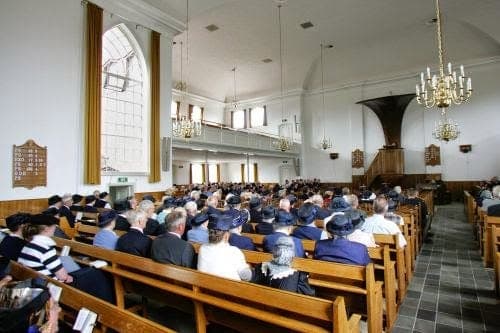
This and other future, church related articles, are intended to use in concise teaching for those seeking membership. It is from a Reformed Baptist viewpoint, but it should be mostly agreed upon by all Bible believing Christians. It is a work in progress! I hope this and future articles be collated at the end for use of churches.
“So we, being many, are one body in Christ, and every one members one of another” (Romans 12:5).
A man may attend the same church for years, listen gladly to the preaching, enjoy Christian friendship, and even help from time to time, yet still refuse membership. “I belong to Christ,” he says. “Why must I belong to a church?” “I am already a member of this congregation by my attendance.” “I don’t see church membership in the Bible.”
The questions sound spiritual, but it conceals a serious mistake. Christ does not gather His people into a loose crowd of independent hearers. He forms them into a body. The New Testament knows believers who are added, known, shepherded, accountable, and joined in service. It does not encourage a Christian to live permanently at the edge of the church, receiving its blessings while avoiding its life and responsibilities.
Membership does not save
Joining a church does not make anyone a Christian. The church cannot give the new birth, cancel guilt, or supply a righteousness fit for heaven. Salvation is in Christ alone. We are justified by faith in His perfect obedience and atoning blood, not by having our name entered upon a church register.
On the day of Pentecost, the people first “gladly received his word”; then they “were baptized”; and then they “were added” to the number of the church at Jerusalem (Acts 2:41). The order matters. The Greek verb translated “were added” is passive. They did not merely drift into a religious crowd. They were openly numbered with a recognisable people.
Membership is not the root of salvation, but it is one of its proper fruits. A wedding ring does not create a marriage, but it openly declares a real covenant bond between a man and a woman. Likewise, membership does not unite us savingly to Christ, but it openly identifies us with His people.
Christ joins believers to a body
Paul says, “we, being many, are one body in Christ.” The word translated “members” means limbs or parts of a body. It does not refer merely to names on a list. A member is a living part, joined to other parts and intended to work with them, in a particular body.
Then Paul adds that we are “members one of another.” The expression is reciprocal. We do not merely belong beside one another. Under Christ we belong to one another. Every part receives as well as gives.
Can a severed hand say, “I possess life in myself, therefore I need no body”? Detached from the body, it cannot flourish or fulfil its purpose. Likewise, the believer was not designed for solitary Christianity. He needs biblical preaching, prayer, correction, encouragement, example, and the Lord’s ordinances. The church also needs the graces, prayers, presence, and service God has entrusted to him.
Membership gives fellowship a definite form
The believers in Jerusalem “continued steadfastly in the apostles’ doctrine and fellowship” (Acts 2:42). “Fellowship” translates koinōnia , a word carrying the ideas of sharing, participation, and partnership. It is far richer than friendliness after a service.
They also “continued steadfastly.” The verb means to persist in or devote oneself to something. Their fellowship was not occasional enthusiasm. It was settled devotion.
This is what membership expresses: These are the people with whom I will worship, pray, serve, suffer, and persevere. These are the elders whose lawful, biblical oversight I will receive. These are the brethren whose burdens I will help to carry.
It is easy to claim love for all Christians everywhere. Such love may cost very little. The test comes when we must love particular Christians, including those whose weaknesses inconvenience us and whose needs interrupt our plans. Do we love the church in the abstract, or will we love the brother sitting three rows behind us?
Membership is more than attendance
An attender may behave like a guest in a hotel. He asks whether the room is comfortable, the food is suitable, and the service meets his expectations. A member belongs to the household. He asks what work must be done, who needs help, and how the honour of the home may be maintained.
This does not mean every member must hold an office or undertake constant public activity. The frail, elderly, housebound, and disabled remain precious parts of the body. A praying widow or a busy mother may render more spiritual service than a noisy organiser. Membership is not measured by visibility, but by faithful attachment to Christ and His people.
Still, the Christian must not merely ask, “What does this church give me? Do I like the music, the preaching, their meetings for my children, etc?” He must essentially ask, “Is the Bible and the gospel faithfully preached? Is it ordered by Scripture? Can I submit peacefully to its doctrine and oversight? Whom am I strengthening? What burden am I carrying? Does my presence add prayer, stability, and love to this fellowship?”
A consumer remains while satisfied. A faithful member remains because he has committed himself before God, unless Scripture and conscience provide a serious reason to leave.
Membership brings oversight and accountability
The elders are commanded to “feed the flock of God which is among you” (1 Peter 5:2). They do not shepherd an undefined multitude. They must know which souls are committed to their care. They cannot care for people who drift in and out, or those who listen to the preaching online.
Members are told: “Obey them that have the rule over you, and submit yourselves: for they watch for your souls” (Hebrews 13:17).
The word translated “obey” includes the thought of being persuaded and yielding to trustworthy guidance. This is not blind obedience. Elders have no right to command beyond Scripture. Yet Christians should not use the sins of abusive leaders as an excuse to reject all biblical oversight.
Accountability is a mercy. We all have blind spots. A man may notice a stain on his brother’s coat while remaining unaware of the tear in his own. Who will warn us when pride is hardening, bitterness is spreading, or worldliness is quietly cooling our love to Christ? A faithful church does not merely applaud us. It helps us towards heaven.
Membership is privilege and duty
Membership brings great privileges: the Lord’s Supper, pastoral care, the prayers of the church, practical help in affliction, participation in important decisions, and the loving watchfulness of fellow believers.
But privileges cannot be separated from duties. The New Testament commands Christians to: Love one another (John 15:12,17; Romans 13:8), Pray for one another (James 5:16), Exhort one another (Hebrews 3:13), Forgive one another (Ephesians 4:32), Bear one another’s burdens (Galatians 6:2), Comfort one another (1 Thessalonians 4:18), Receive one another (Romans 15:7), Serve one another (Galatians 5:13), Admonish one another (Romans 15:14).
These commands cannot be obeyed properly at a distance. These repeated words assume definite relationships. We cannot meaningfully obey them while remaining deliberately unknown and unattached.
There may be temporary and exceptional reasons why a true believer is without membership. But fear of commitment, dislike of accountability, or the wish to leave whenever disappointed are not sound or biblical reasons.
The great question is not merely, “Must I join?” It is this: If Christ loved the church and gave Himself for it, how can I treat belonging to His people as a small matter? He did not save us to be customers visiting a religious service. He saved us to be living stones in His house, sheep in His flock, and members of His body.
Church membership is therefore not an administrative formality. It is a visible, solemn and joyful commitment to walk with Christ’s people under His Word.
We give ourselves first to the Lord, and then, by His will, to one another.
Questions and exercises
Why can church membership never contribute to our justification before God?
What order can be seen in Acts 2:41 between receiving the Word, baptism, and being added to the church?
What does the word translated “members”, teach us about our relationship to the church?
How does biblical fellowship differ from friendliness or occasional church attendance?
What does the illustration of a hotel guest and a household member expose about consumer Christianity?
Why should pastoral oversight and loving correction be regarded as privileges?
Are you presently receiving more from the church than you are contributing through prayer, encouragement, attendance, giving, or service?
Write down the names of two members whom you could encourage, visit, pray for, or assist during the coming week.
Written by Pooyan Mehrshahi.
Follow on Substack (opens in a new tab)A warm invitation
Come and Hear the Bible Preached
Join us at Providence Baptist Chapel in Cheltenham this Sunday at 11:00 am and 5:30 pm.