Christian Living
Did God Ever Put the Children Out?
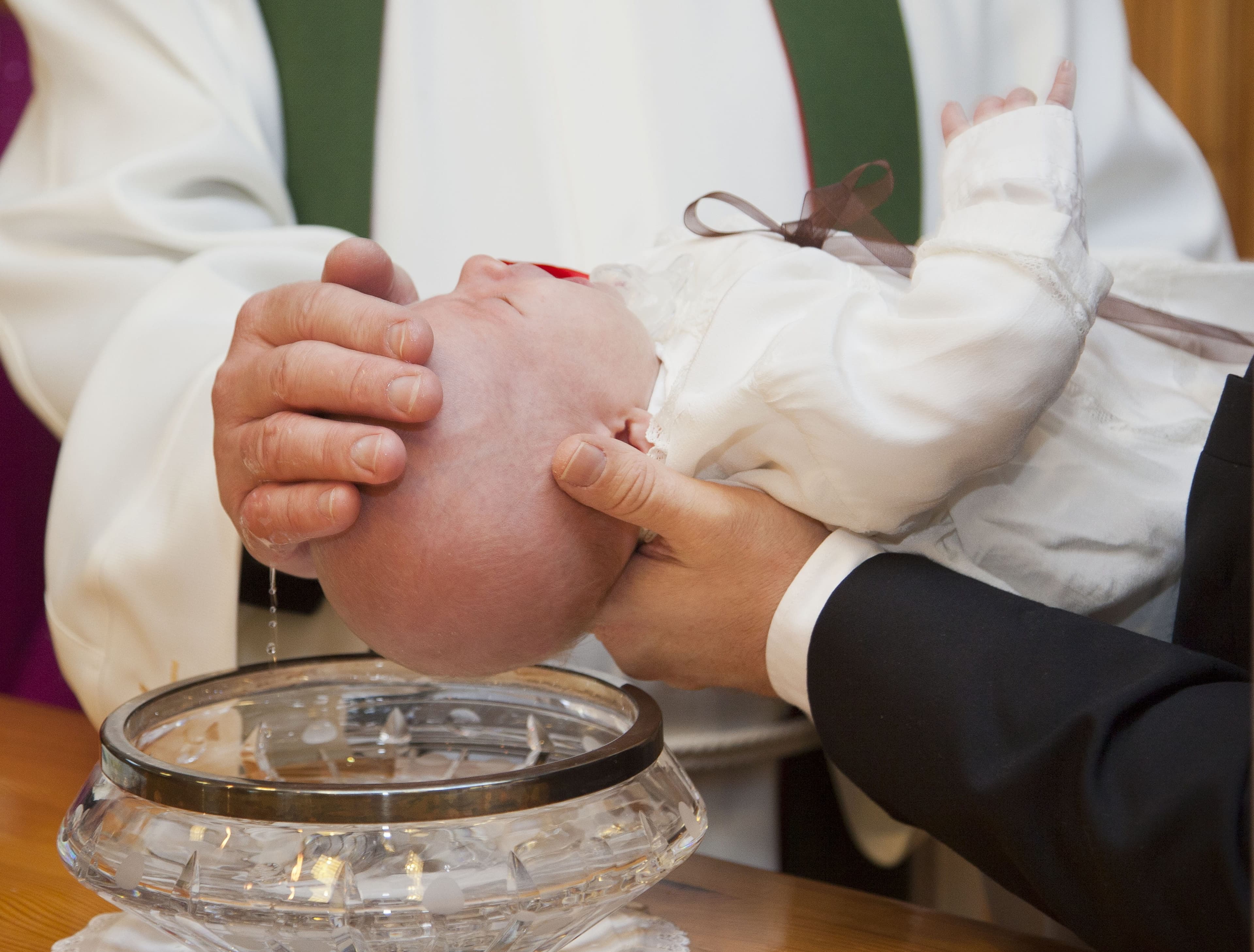
One church, a New Covenant, and the argument from church history
Part Two of “ Circumcision and Baptism: See the Difference? (opens in a new tab) ” Please read before reading this article.
In the previous article we dealt with the usual arguments used from the Bible for infant baptism. We looked at circumcision, Colossians 2, Acts 2:39, household baptisms and the repeated New Testament pattern of faith followed by baptism.
But a thoughtful Presbyterian of Anglican will often say, “You are still starting too late. The children were already in.”
B. B. Warfield put it memorably:
“God established His Church in the days of Abraham and put children into it. They must remain there until He puts them out.”[1]
There is a second objection which often follows close behind.
What about church history? If Baptists are right, are we really saying that Calvin, Owen, Edwards and millions of faithful Christians were never properly baptised? Are we going to dismiss centuries of Christianity because a comparatively small number of Baptists read the Bible differently?
Those are serious questions. They deserve serious answers.
But neither question can be allowed to carry its conclusion hidden inside it.
Yes, there is one church
Let us begin with what should not be controversial.
There is one people of God throughout redemptive history.
Abraham was justified by faith. David knew the forgiveness of sins. Moses esteemed “the reproach of Christ greater riches than the treasures in Egypt” (Hebrews 11:26). Stephen even calls Israel:
“the church in the wilderness” (Acts 7:38).
A Reformed Baptist does not need to run away from that.
The 1689 Baptist Confession says that the universal church consists of all God’s elect who “have been, are, or shall be gathered into one, under Christ”.[2]
The Westminster Confession says much the same concerning the invisible church.
But here the confessions part company.
Westminster goes on to define the visible church as those who profess the true religion “and of their children”. [3]
The 1689 Baptist Confession does not.
It says particular congregations are to be constituted of “visible saints” , those professing the faith of the gospel and obedience to Christ.[4]
That difference should be seen clearly, as it is not accidental. It is the heart of the dispute.
So simply saying, “There is one church” , does not settle the question.
The Baptist agrees that there is one church in the great sweep of God’s saving purpose. What he denies is that one people of God requires one unchanging rule of outward covenant membership .
That conclusion does not follow.
Israel had tribes determined by physical descent. It had an earthly priesthood restricted to one tribe. It had circumcision for males. It had a land, a national government and genealogical boundaries.
The New Testament church inherits the promises fulfilled in Christ. It does not inherit every outward structure by which Israel was constituted.
The same family may live in the same house for generations while the arrangements within the house change dramatically. Continuity of the family does not mean grandfather’s nursery rules remain binding on the grandchildren. And similarly, over many years, the house was being built and extended, and then at some point the old scaffolding is removed when the building is completed. Pointing to the scaffolding and saying, “But it used to belong to the house”, does not prove that it must remain forever.
The question is not, “Is this still God’s people?”
The question is, “How has Christ ordered His people now?”
The argument from silence works backwards
Now we come to the famous challenge:
“Where did God revoke children’s membership?”
It sounds formidable.
But think carefully about what is being demanded.
The Baptist is being asked to produce a verse saying:
From this day onwards, the infant children of believers are no longer members of the visible church.
But why must the New Covenant contain such a cancellation notice?
That assumes that every earlier covenantal arrangement remains binding unless individually revoked.
Scripture never gives us that rule.
In fact, Paedobaptists themselves do not operate consistently by it.
Genesis 17 did not merely include children. It specified males, the eighth day, natural descendants and household males.
Those things do not simply continue.
Nobody asks, “Where did God revoke the eighth day?”
Nobody asks why the daughter of a Christian receives baptism when female infants did not receive circumcision.
Nobody baptises an unbelieving male servant because Abraham circumcised those bought with his money.
Why not?
Because everyone recognises that the New Covenant has its own ordinances and those ordinances have their own institution .
This is particularly important for those of us who believe the regulative principle of worship.
The 1689 Baptist Confession describes baptism and the Lord’s Supper as ordinances of “positive and sovereign institution, appointed by the Lord Jesus”. [5]
That means Christ determines their subjects, elements and use.
We do not rummage through an earlier covenant, find something similar, and carry across whichever pieces appear suitable.
The Westminster tradition itself accepts doctrine derived by “good and necessary consequence”. Fine. So do Baptists when the consequence genuinely is necessary.
But necessary consequence must first be necessary .
If the argument is:
Infants belonged to the Abrahamic covenant community.
The church continues.
Therefore infants must belong to the New Covenant visible church.
The disputed assumption sits between statements two and three.
Why must continuity of God’s people mean continuity of that particular membership principle?
That is precisely what needs proving.
It cannot simply be built into the question, “Where were they put out?”
Are children worse off under the New Covenant?
Sometimes the argument becomes emotional at this point.
“Are you really saying that the children of Christians have fewer privileges under the better covenant?”
No.
The mistake is assuming that receiving an outward covenant sign is the measure of spiritual privilege .
A Christian child may hear the name of Christ before he understands his own surname. He may hear Scripture every morning, prayer every night and gospel preaching every Lord’s Day. His parents may teach him his sin, his need of the new birth, the meaning of the cross, the resurrection and the freeness of God’s grace.
What an extraordinary privilege.
A child raised in such a home lives beside a running fountain while millions grow up in a desert.
But standing beside the fountain is not drinking.
Christian parents cannot believe for their children. They cannot regenerate them. They cannot pass union with Christ through the family bloodline.
The loss of an inherited covenant badge is not the loss of Christ.
Our children need something infinitely greater than a sign placed upon them in infancy. They need the thing or even better, the Person signified.
They need Christ Himself.
But what about church history?
Here Baptists need to be scrupulously honest.
Infant baptism is ancient.
Anyone who claims it suddenly appeared with Constantine or in the medieval Roman church is making our case weaker, not stronger.
Tertullian knew the practice around the beginning of the third century. Interestingly, he advised delaying baptism, “principally... in the case of little children”. [6]
Origen went further. In writings preserved in Latin translation he speaks of the church giving baptism to little children and attributes the practice to apostolic tradition.[7]
By Cyprian’s day in the middle of the third century, infant baptism is undeniable. Sixty-six bishops considered whether a newborn infant should wait until the eighth day before baptism. They concluded that baptism should not be delayed.[8]
We should not hide any of that.
As far as we can read the early writings and understand them, it is real historical evidence.
It tells us that infant baptism is early.
It tells us that by the third century it was widespread in significant parts of the church.
It tells us that some early Christians believed it came from apostolic tradition.
What it cannot do is turn an uninspired historical claim into an apostolic command. And what it cannot do, is to say that this was universally agreed. We also know that there were ministers and churches who did not agree with baptising infants and those who did not profess faith in Christ.
That distinction matters.
We do not possess a video recording of the second century. There are gaps in our evidence. We cannot say with certainty exactly when, where or why infant baptism first arose.
Historical humility cuts both ways.
The Baptist should not claim to know more than the evidence proves.
The paedobaptist should not make the evidence prove more than it can.
Early is not the same as apostolic.
And that becomes especially obvious when we continue reading the fathers rather than stopping when we find something useful to our position.
The same church practiced infant communion
This is where the historical argument becomes uncomfortable.
The ancient church which gives us clear evidence of infant baptism also gives us clear evidence of infant communion .
Cyprian describes a very young child being brought to the Eucharist and receiving from the cup.[9]
Augustine does not treat infant communion as some strange abuse on the edge of Christian practice. He argues theologically for the necessity of infants partaking of Christ’s body and blood, appealing particularly to John 6:53.[10]
Most Reformed paedobaptists reject infant communion.
And they are right to reject it.
But why?
Because they return to Scripture and ask who the Lord’s Supper is for and how Christ has commanded it to be received.
Exactly.
Now the historical argument has changed shape.
If ancient and widespread Christian practice is enough to settle the matter, infant communion becomes very difficult to escape.
If Scripture is permitted to correct ancient sacramental practice, then antiquity cannot settle infant baptism either.
That is not dismissing history.
It is putting history where Protestants have always said it belongs.
Church history is a witness, not the judge.
Tradition deserves to be heard. Sometimes it rebukes our modern arrogance. Sometimes it exposes blind spots we did not know we had.
But tradition does not get the final chair at the table.
Scripture does.
Otherwise the Reformation itself becomes very difficult to defend.
Rome could point Luther and Calvin towards centuries of custom, councils, bishops and learned theologians.
The Reformers still had to ask:
What has God actually said?
“Are you saying Calvin, Owen and Edwards were never baptised?”
Now we reach the question which often carries the greatest emotional weight.
If believer’s baptism is correct, what are we supposed to say about Calvin? Owen? Edwards? Rutherford? M’Cheyne?
Were these men not Christians?
Of course they were.
The question itself mixes together several things which must be kept separate.
Was someone a genuine Christian?
Was the water applied to him in infancy biblical baptism?
Was every feature of his church biblically ordered?
Those are not the same question.
According to the Baptist understanding of Christ’s ordinance, water applied to an unconscious infant is not New Testament baptism.
But salvation does not rest upon possessing a perfectly ordered baptism.
We are justified by faith in Christ.
We can believe John Owen was wrong about baptism while thanking God for what Owen taught about the glory of Christ.
We can believe Calvin misunderstood the proper subjects of baptism while recognising that God used him mightily to recover the gospel from medieval corruption.
Great men can be wrong.
That should hardly surprise Calvinists.
We spend half our theological lives explaining that the best of men are still men.
Does this mean Paedobaptist churches are not true churches?
Here we would resist sweeping language.
The 1689 Baptist Confession says:
“The purest churches under heaven are subject to mixture and error.”[11]
An error concerning an ordinance is serious because Christ’s commands are serious.
But error does not automatically erase every evidence of a true church, true preaching, true saints and true works of grace.
Historically, Baptists themselves have differed over how this should affect communion.
John Bunyan defended communion with visible saints whose baptism he regarded as defective. William Kiffin defended the stricter position that believers baptism should precede admission to the Lord’s Table.[12]
We do not need to settle every question of interchurch recognition before we can settle the biblical question concerning baptism.
The universal church is not created by water.
It consists of those united savingly to Christ. We are justified through faith in Christ, not through perfect ecclesiology.
There is a difference between recognising a brother and endorsing everything his church does.
A man may be beautifully clear on justification and wrong on baptism. Another may have correct baptism and preach a terrible gospel.
We would rather sit under Owen preaching Christ than under a perfectly immersed heretic.
Perhaps Warfield’s question is the wrong question
And so we return to where we began.
“Where did God put the children out?”
It is memorable. We understand its appeal.
But we no longer think it is the question Scripture requires us to answer.
The New Covenant is not Genesis 17 continuing indefinitely until every old provision receives a written cancellation.
Christ has come.
The shadows have reached their substance. The promises have reached their Seed. The King has established His covenant and given His church her ordinances.
So instead of asking for an eviction notice from an earlier covenant, ask for the positive warrant under the covenant now in force:
Where does Christ place an unprofessing infant into the visible New Covenant church simply because his parent believes?
That is the issue.
The previous article dealt with the texts usually offered in answer. We do not believe Acts 2:39, household baptisms, Colossians 2, 1 Corinthians 7 or covenant continuity supplies the missing warrant.
And church history cannot supply what divine institution does not.
So let us love our Presbyterian and Anglican brethren. Let us read their books. Let us be thankful for Calvin, Owen, Edwards, Murray and many others. Let us refuse the silly idea that Baptists alone have possessed the truth for two thousand years.
But let us also refuse another mistake.
Great names cannot baptise an argument.
The church does not honour her history by placing it beyond correction.
She honours her history best when she does what her finest teachers themselves taught her to do:
Open the Bible and submit everything to the Word of God.
And on this question, we remain persuaded that the burden still rests with our paedobaptist brethren.
Not:
Where did God put the children out?
But:
Where did Christ put the unprofessing infant in?
Christian children should be loved deeply, prayed for earnestly, instructed from infancy and brought continually beneath the sound of the gospel.
But they need more than Christian parents.
They need the new birth.
They need repentance.
They need faith.
They need Christ.
And when they profess that Christ for themselves, and are His disciples, then there is water waiting.
Endnotes
1. Benjamin B. Warfield, “The Polemics of Infant Baptism,” originally published in The Presbyterian Quarterly 13, no. 2 (April 1899): 313–334; later in Studies in Theology , vol. 9 of The Works of Benjamin B. Warfield (New York: Oxford University Press, 1932; repr. Grand Rapids, MI: Baker, 1981), 408.
2. The Second London Baptist Confession of Faith (1677/1689), 26.1. It defines the catholic or universal church as the whole number of the elect who “have been, are, or shall be gathered into one, under Christ”.
3. The Westminster Confession of Faith , 25.2. Westminster defines the visible church under the gospel as those professing the true religion “and of their children”. The Westminster Larger Catechism, Q. 62, makes the same assertion and cites, among other texts, Genesis 17:7, Acts 2:39, Romans 11:16 and 1 Corinthians 7:14.
4. The Second London Baptist Confession of Faith (1677/1689), 26.2, 6. Particular congregations are to consist of “visible saints”, with members visibly manifesting their calling through profession and conduct.
5. The Second London Baptist Confession of Faith (1677/1689), 28.1: baptism and the Lord’s Supper are ordinances “of positive and sovereign institution, appointed by the Lord Jesus”.
6. Tertullian, De Baptismo [ On Baptism ], ch. 18, trans. S. Thelwall, in Ante-Nicene Fathers , vol. 3, ed. Alexander Roberts and James Donaldson (Buffalo, NY: Christian Literature Publishing Co., 1885).
7. Origen, Commentary on Romans 5.9 and Homilies on Leviticus 8.3.
8. Cyprian of Carthage, Epistle 58 [Letter 64], To Fidus, on the Baptism of Infants , especially §§1–6, in Ante-Nicene Fathers , vol. 5, ed.
9. Cyprian of Carthage, On the Lapsed , §25, in Ante-Nicene Fathers , vol. 5.
10. Augustine of Hippo, On the Merits and Forgiveness of Sins, and on the Baptism of Infants , book I, chs. 26–27, 34, in Nicene and Post-Nicene Fathers , First Series, vol. 5, ed. Philip Schaff (Buffalo, NY: Christian Literature Publishing Co., 1887).
11. The Second London Baptist Confession of Faith (1677/1689), 26.3.
12. John Bunyan, Differences in Judgment about Water-Baptism, No Bar to Communion (London: John Wilkins, 1673). For the stricter Particular Baptist reply, see William Kiffin, A Sober Discourse of Right to Church-Communion (London: George Larkin, 1681).
Written by Pooyan Mehrshahi.
Follow on Substack (opens in a new tab)A warm invitation
Come and Hear the Bible Preached
Join us at Providence Baptist Chapel in Cheltenham this Sunday at 11:00 am and 5:30 pm.
Keep reading
Related articles
Circumcision and Baptism: See the Difference?
Why the Reformed covenant argument for infant baptism ultimately fails

I am So Discouraged!
Discouragement has many addresses. It may sit beside a hospital bed, in the empty chair of bereavement, in a marriage that has broken, in the loneliness of singleness, in the shame of a teenager who feels he has…

When God Does Not Answer
“How long wilt thou forget me, O LORD? for ever? how long wilt thou hide thy face from me?” (Psalm 13:1). There are few trials more painful than unanswered prayer. It is one thing to suffer; it is another to suffer…